Difference between revisions of "Time Course"
| Line 1: | Line 1: | ||
__NOTOC__ | __NOTOC__ | ||
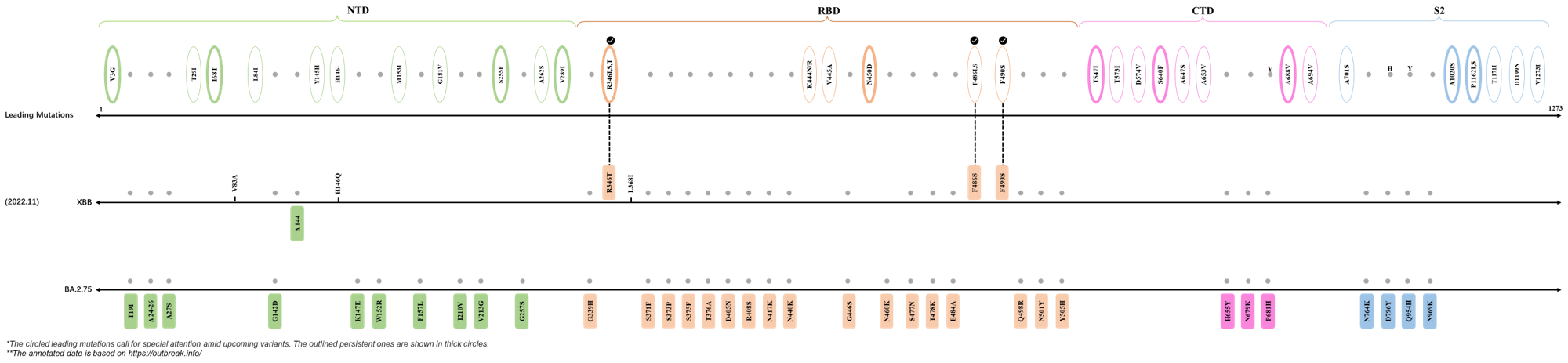
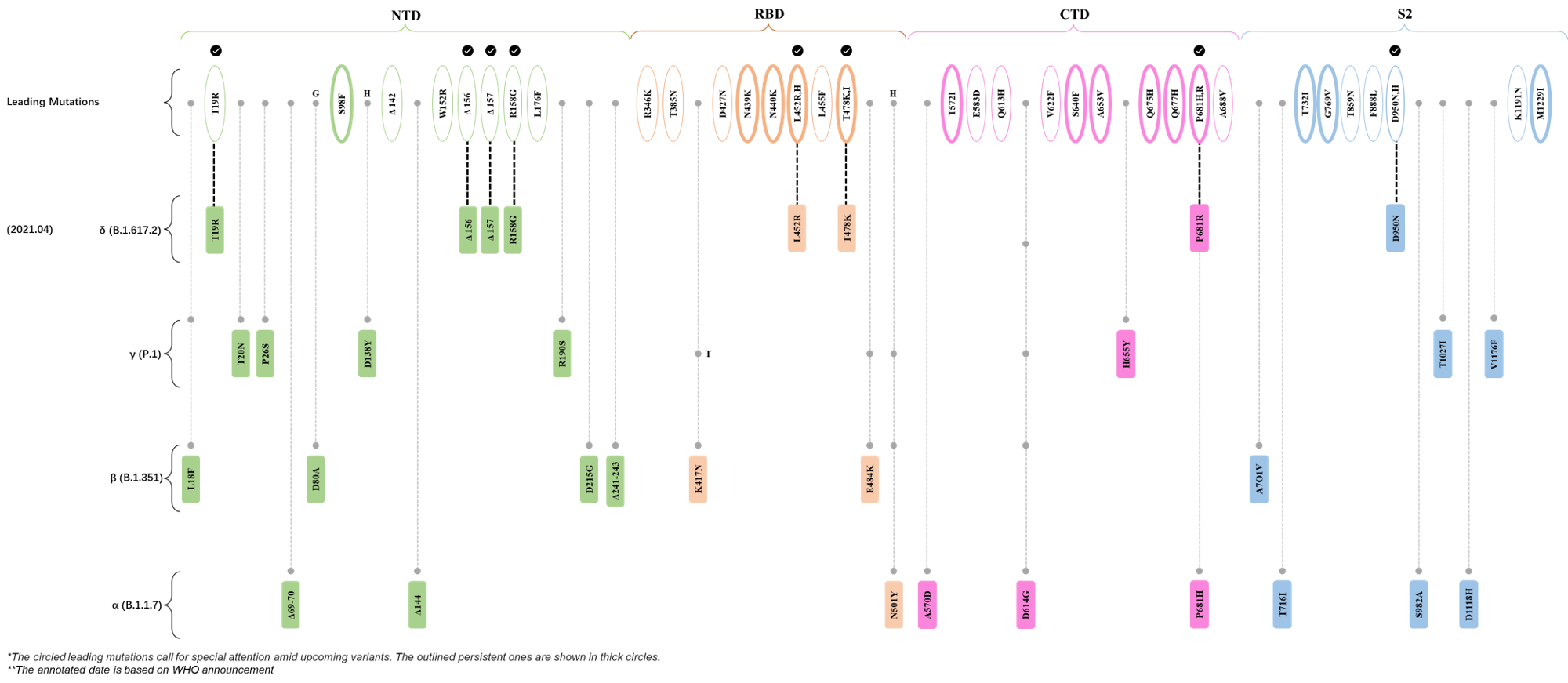
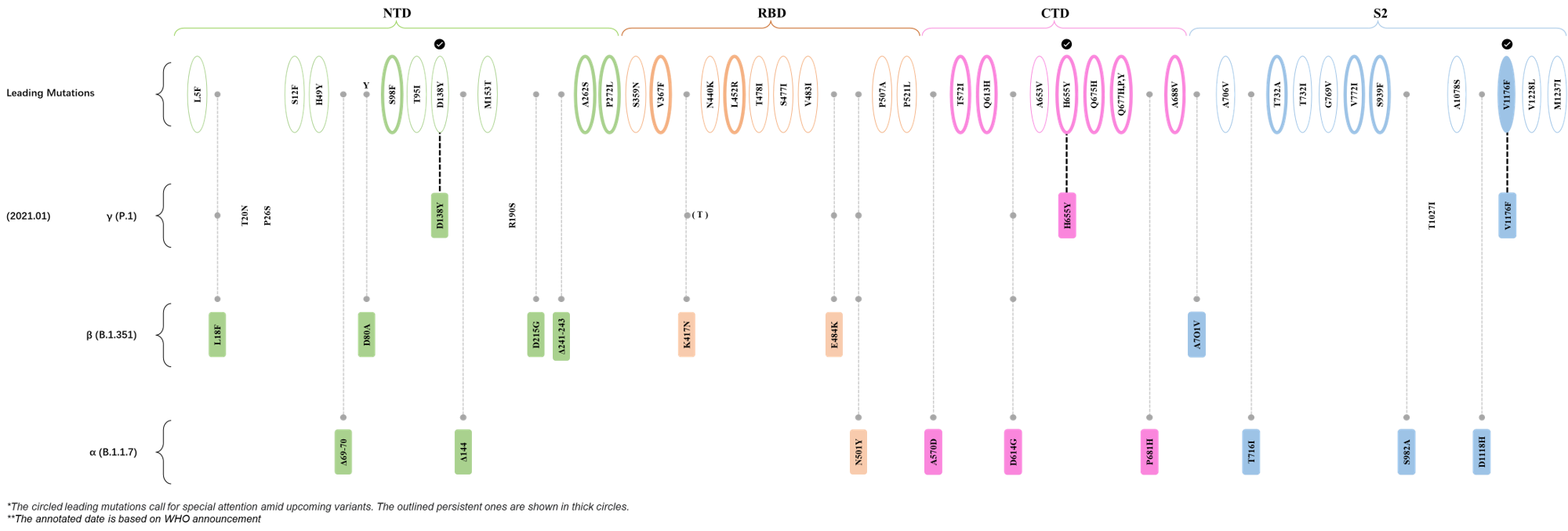
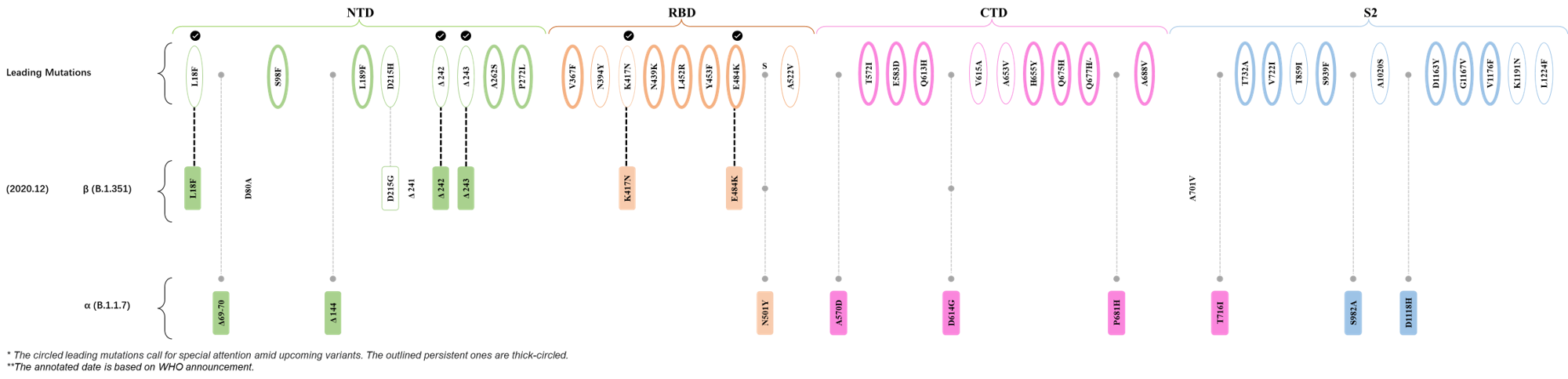
| − | <big>Within the first 2 years of this pandemic, the World Health Organization (WHO) has already announced 4 variants of concern (VOC), which are the previously circulating α (B.1.1.7), β (B.1.351), γ (P.1), and δ (B.1.617.2) strains, and many other variants of interest (VOI).<ref name="WHO" /> The successive emergence of new SARS-CoV-2 variants has brought along many novel mutations | + | <big>Within the first 2 years of this pandemic, the World Health Organization (WHO) has already announced 4 variants of concern (VOC), which are the previously circulating α (B.1.1.7), β (B.1.351), γ (P.1), and δ (B.1.617.2) strains, and many other variants of interest (VOI).<ref name="WHO" /> The successive emergence of new SARS-CoV-2 variants has brought along many novel mutations. Lately, 3 new members of the omicron (B.1.1.529) lineage have emerged, and subsequently been recognized as variants of interest (VOI) by the World Health Organization (WHO), which are the BA.2.75, XBB, and BQ.1 subvariants that rose to prominence between July and October 2022.<ref name="Covariants" /> Each of these VOIs has brought along an array of novel mutations in the constantly evolution of SARS-CoV-2. The time course analysis of identified leading mutations are presented here.<br /></big> |
<tabs> | <tabs> | ||
| Line 35: | Line 35: | ||
<ref name="Covariants">Covariants https://covariants.org/</ref> | <ref name="Covariants">Covariants https://covariants.org/</ref> | ||
</references> | </references> | ||
| − | |||
<!-- | <!-- | ||
<big>Within the first 2 years of this pandemic, the World Health Organization (WHO) has already announced 4 variants of concern (VOC), which are the previously circulating α (B.1.1.7), β (B.1.351), γ (P.1), and δ (B.1.617.2) strains, and many other variants of interest (VOI). The successive emergence of new SARS-CoV-2 variants has brought along many novel mutations, most of which continually refine and improve the fitness of the virus. The identified leading mutations before the outbreak of those VOCs are listed as follows:<br /></big> | <big>Within the first 2 years of this pandemic, the World Health Organization (WHO) has already announced 4 variants of concern (VOC), which are the previously circulating α (B.1.1.7), β (B.1.351), γ (P.1), and δ (B.1.617.2) strains, and many other variants of interest (VOI). The successive emergence of new SARS-CoV-2 variants has brought along many novel mutations, most of which continually refine and improve the fitness of the virus. The identified leading mutations before the outbreak of those VOCs are listed as follows:<br /></big> | ||
Revision as of 17:33, 17 February 2023
Within the first 2 years of this pandemic, the World Health Organization (WHO) has already announced 4 variants of concern (VOC), which are the previously circulating α (B.1.1.7), β (B.1.351), γ (P.1), and δ (B.1.617.2) strains, and many other variants of interest (VOI).[1] The successive emergence of new SARS-CoV-2 variants has brought along many novel mutations. Lately, 3 new members of the omicron (B.1.1.529) lineage have emerged, and subsequently been recognized as variants of interest (VOI) by the World Health Organization (WHO), which are the BA.2.75, XBB, and BQ.1 subvariants that rose to prominence between July and October 2022.[2] Each of these VOIs has brought along an array of novel mutations in the constantly evolution of SARS-CoV-2. The time course analysis of identified leading mutations are presented here.