Difference between revisions of "Time Course"
| Line 2: | Line 2: | ||
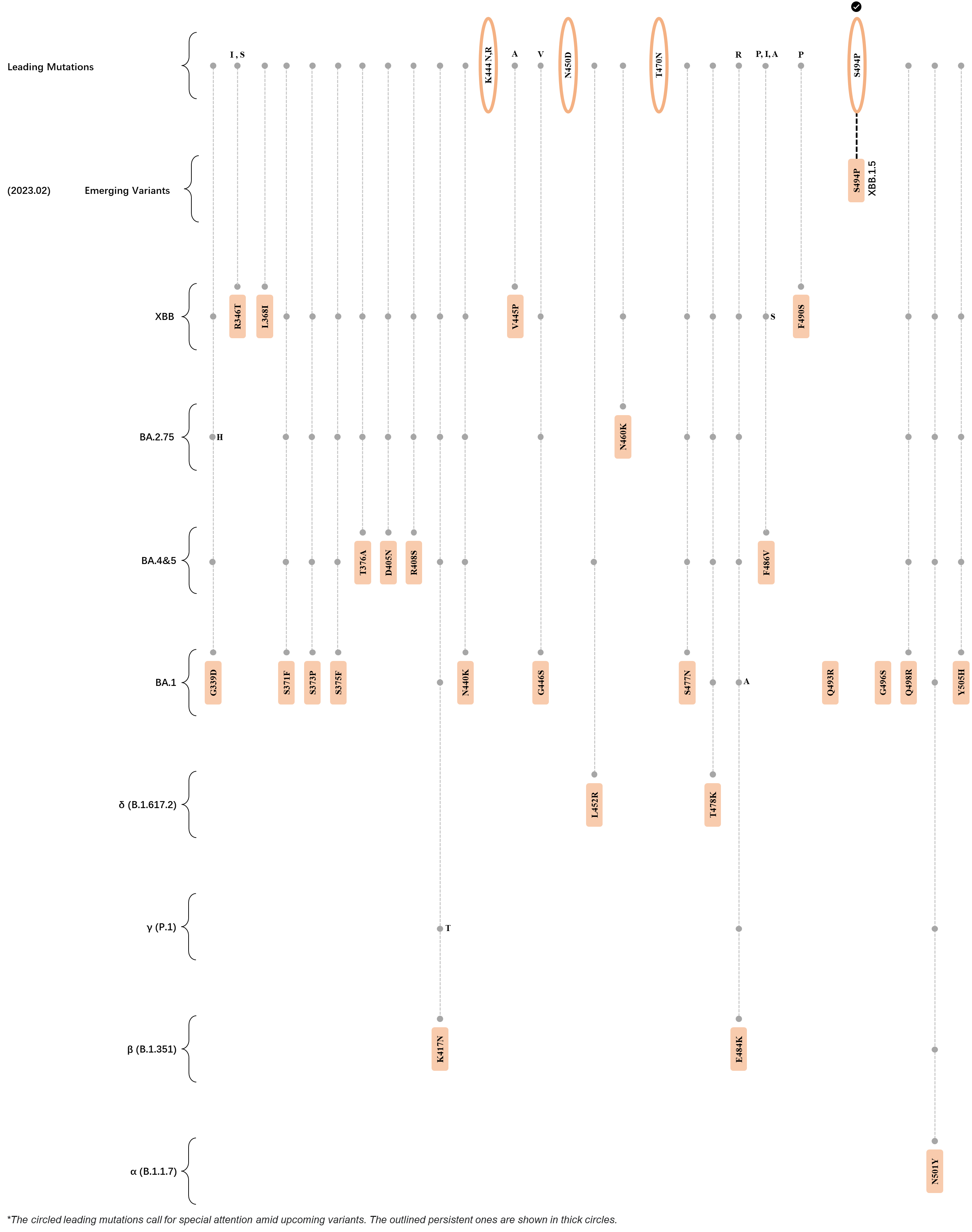
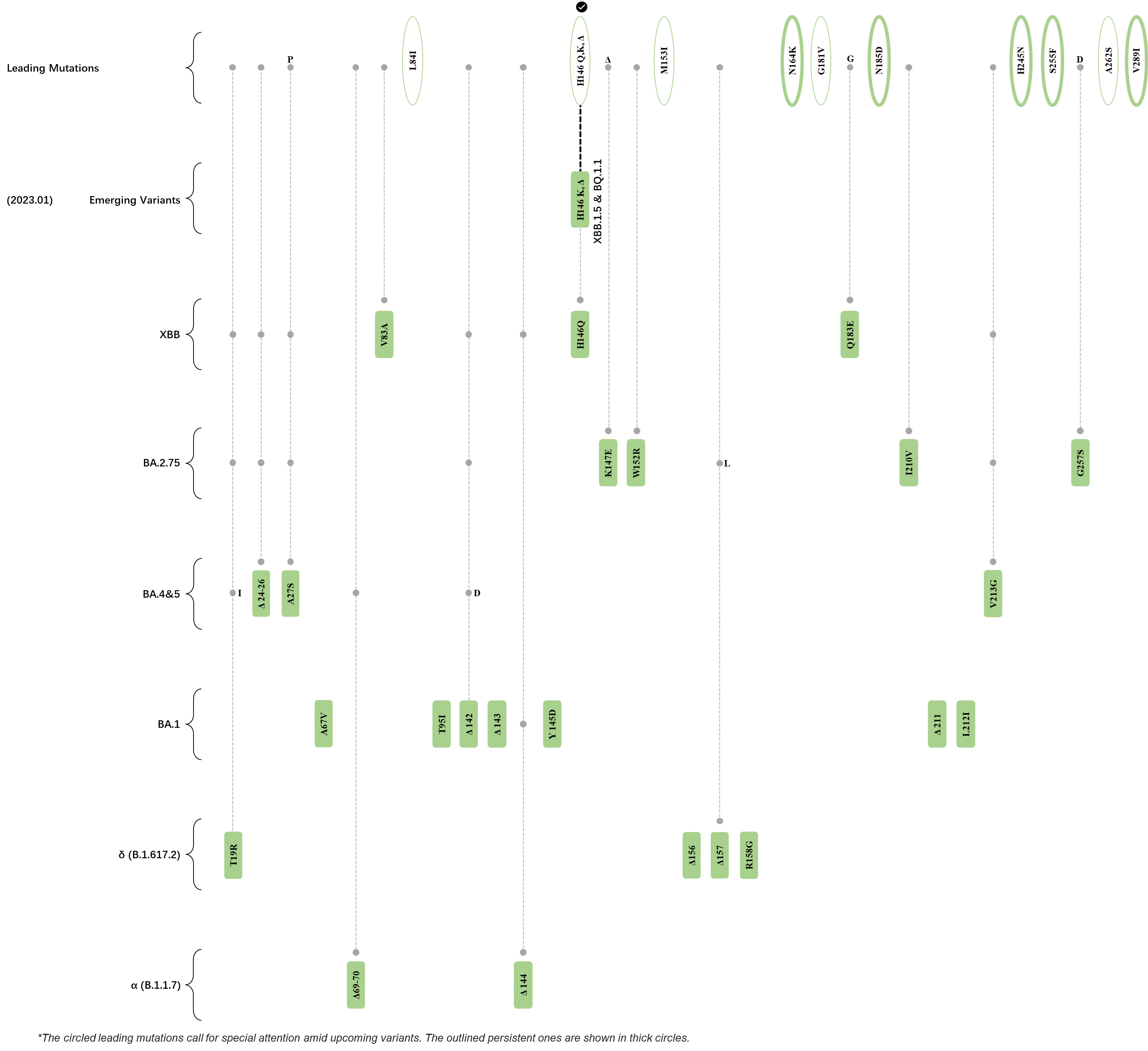
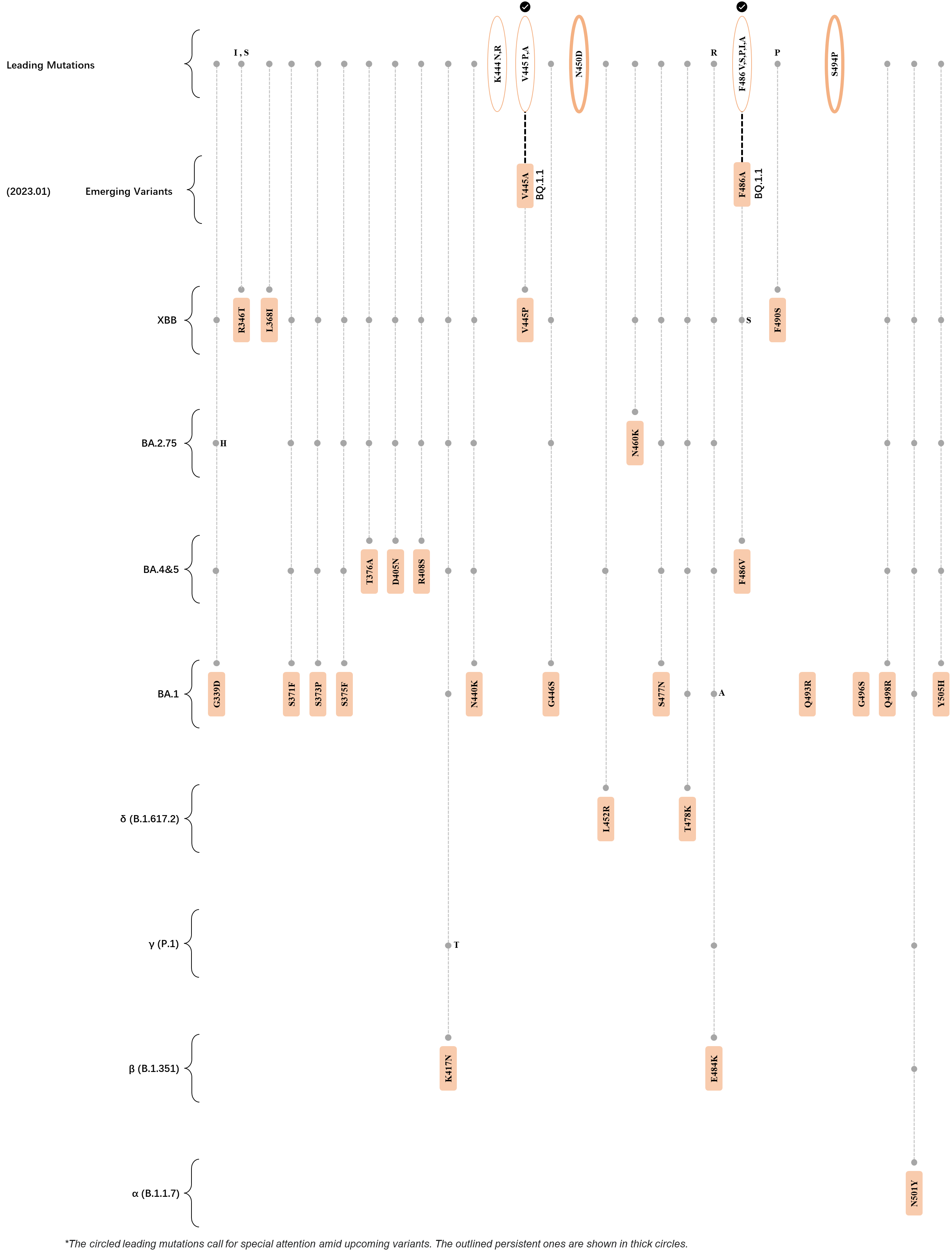
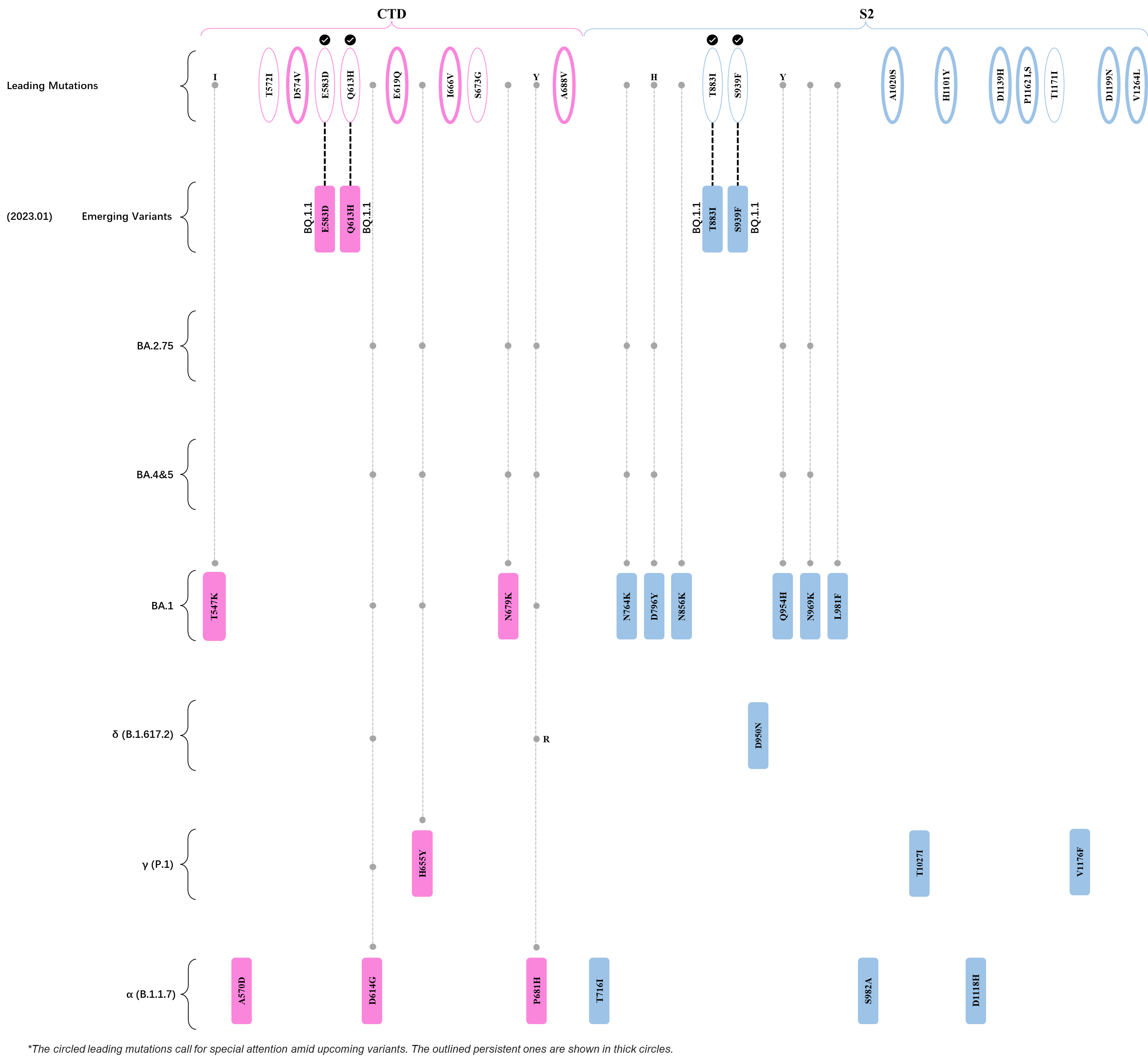
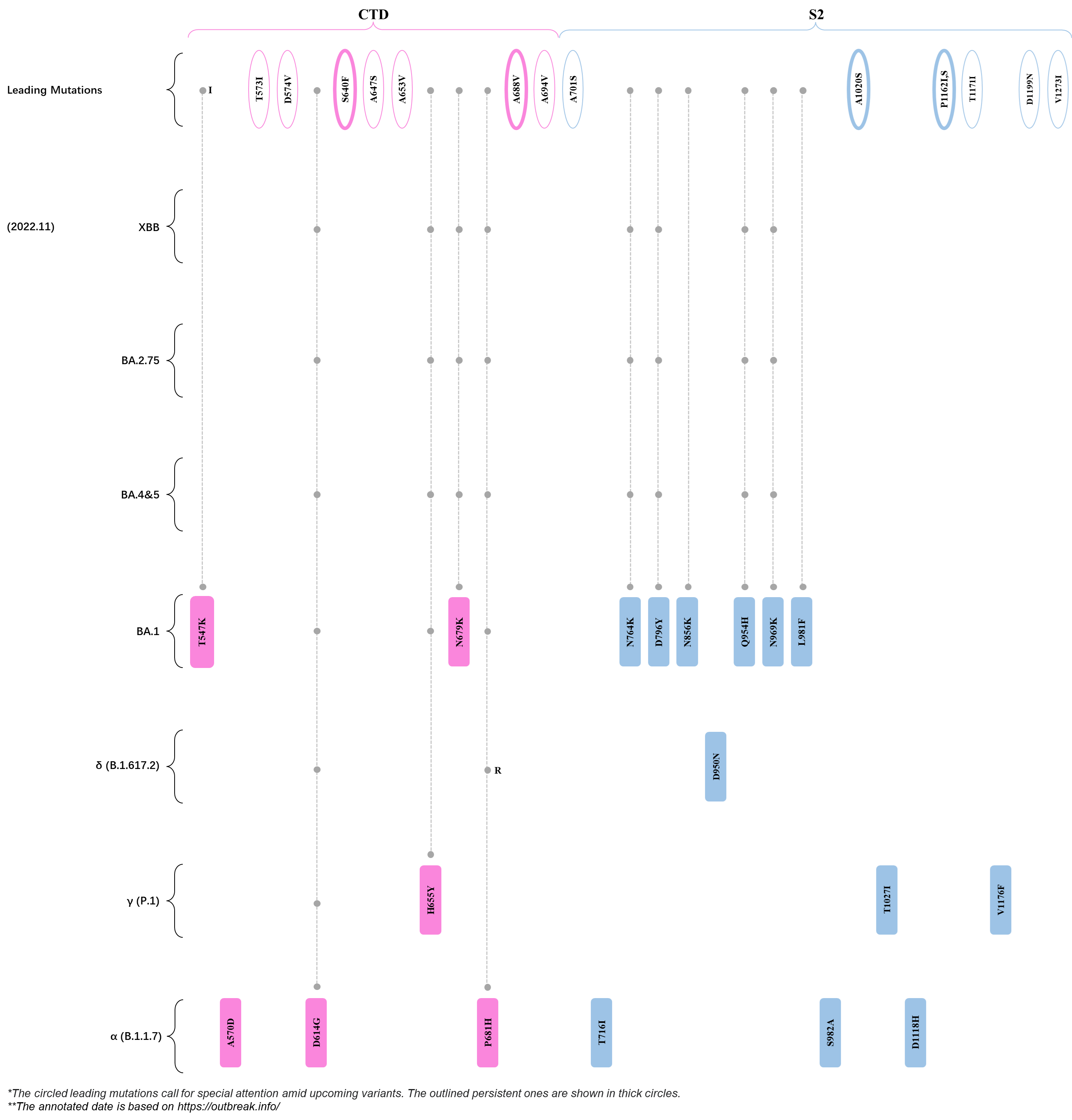
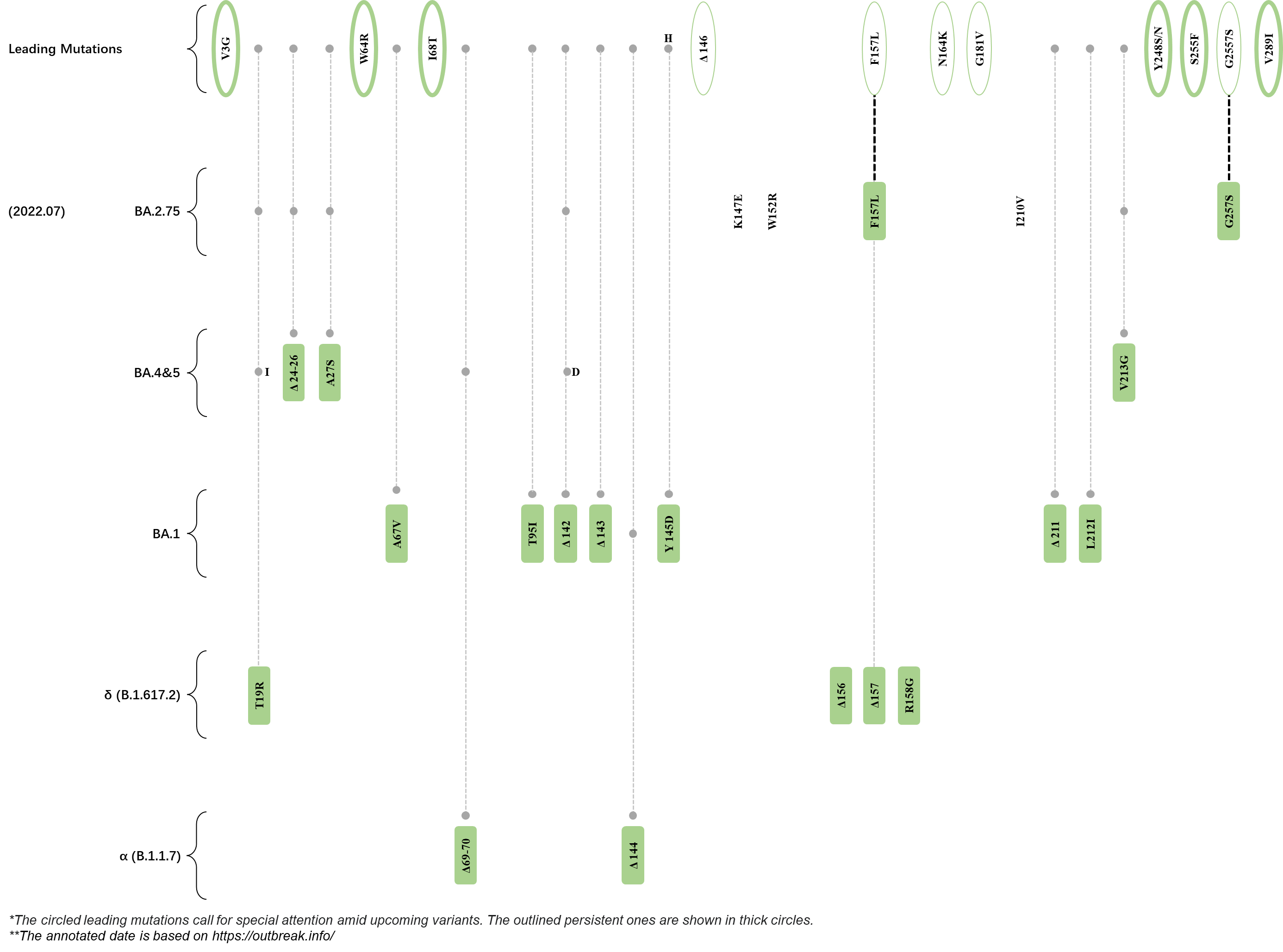
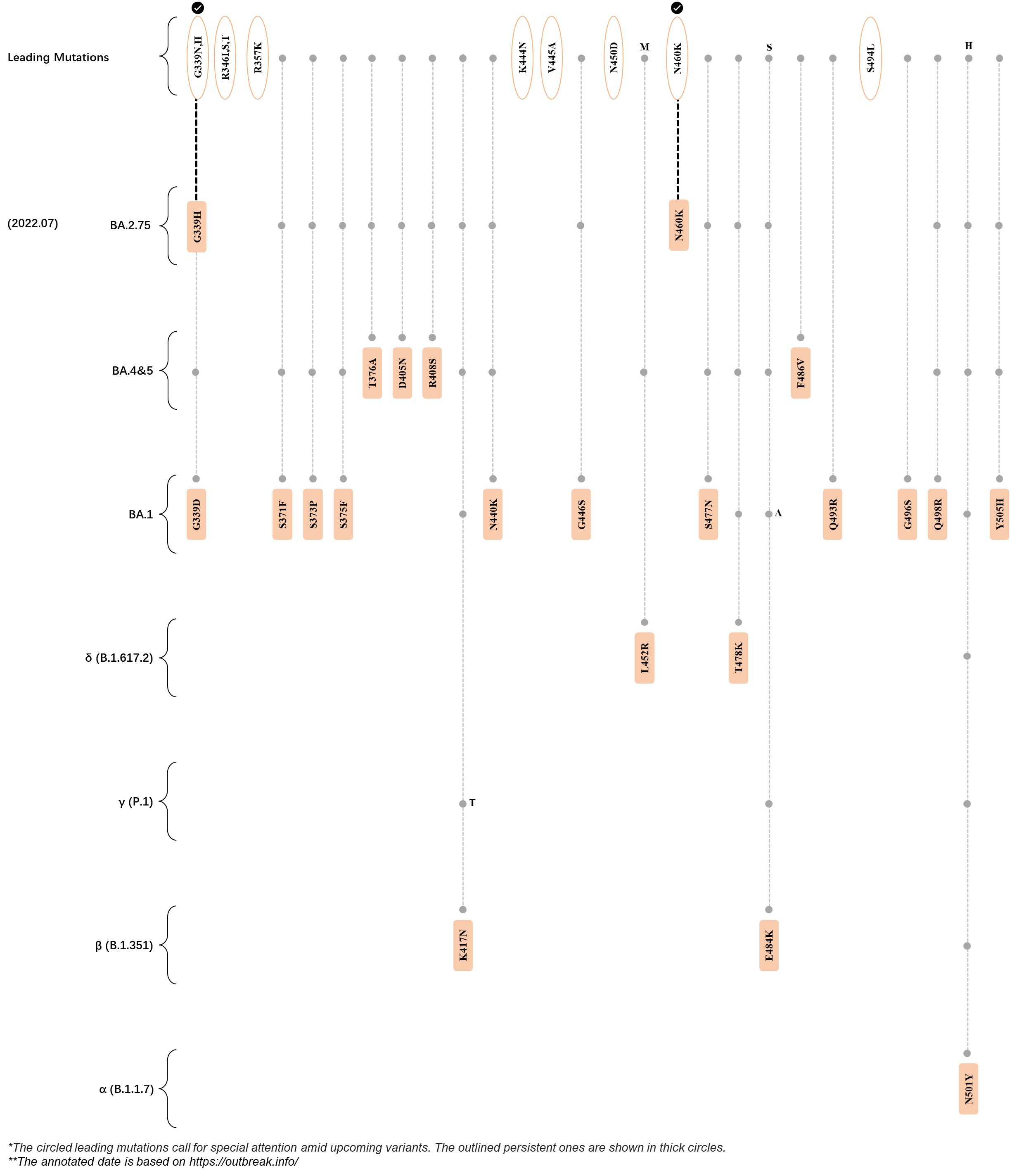
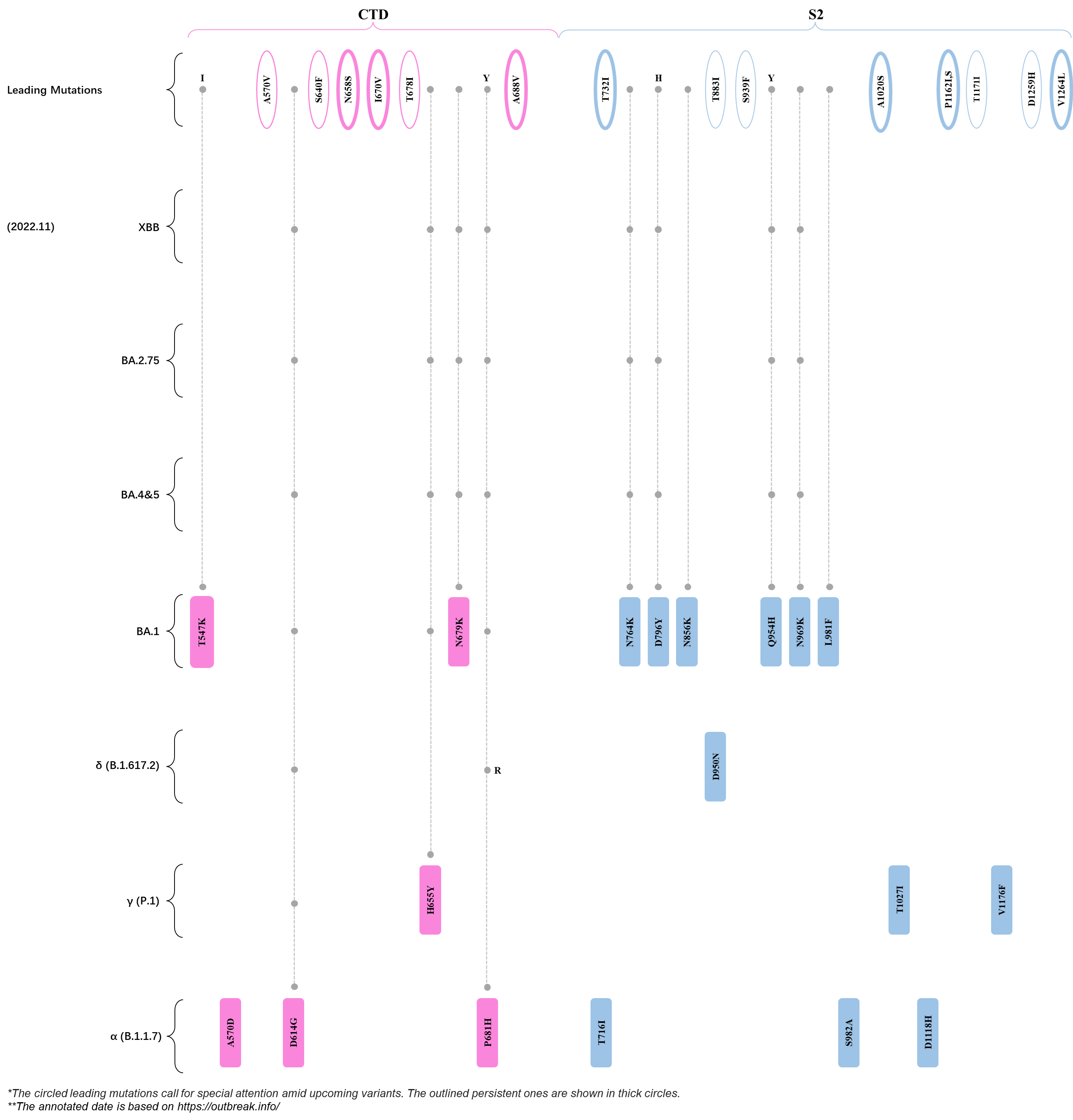
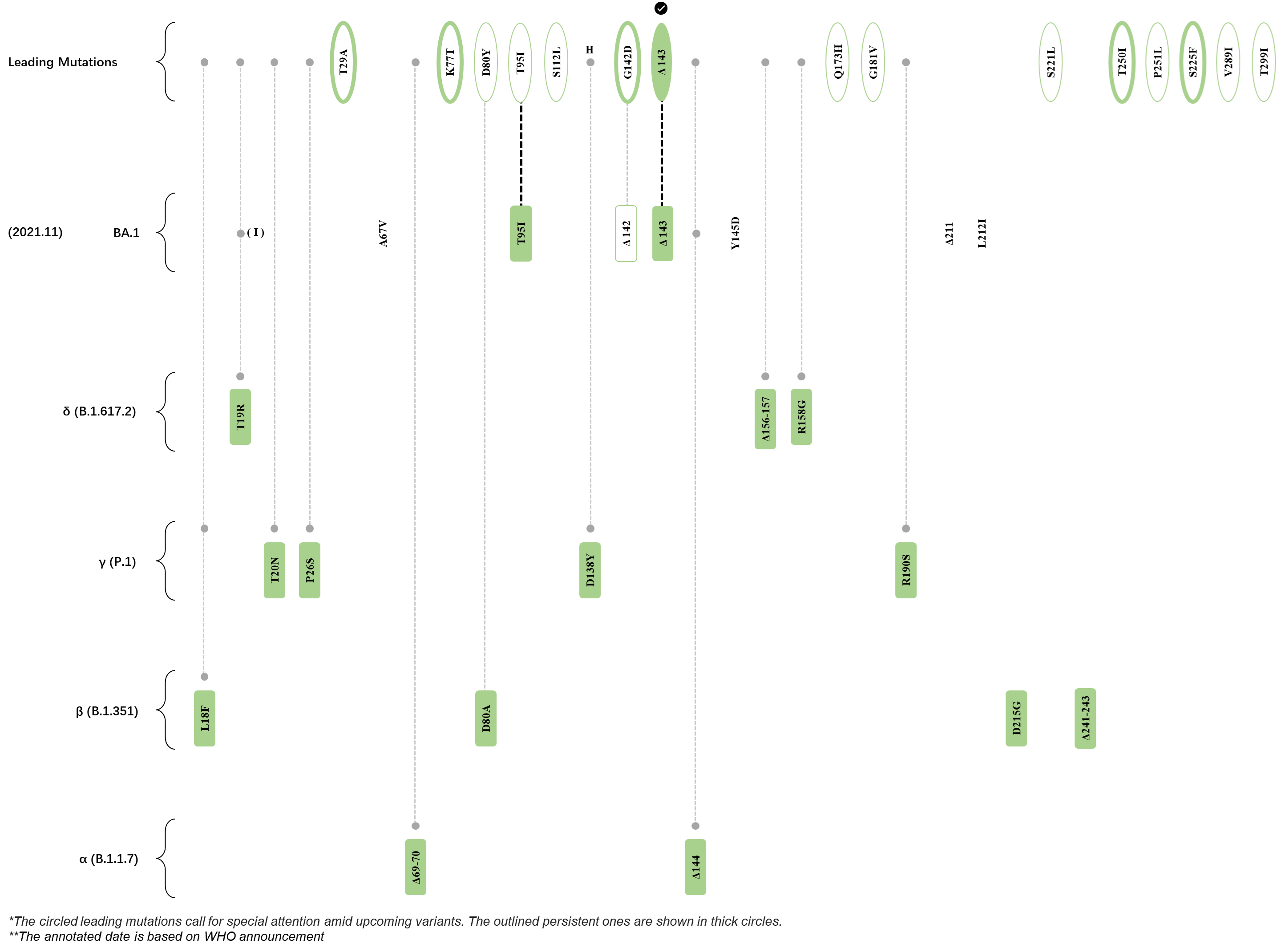
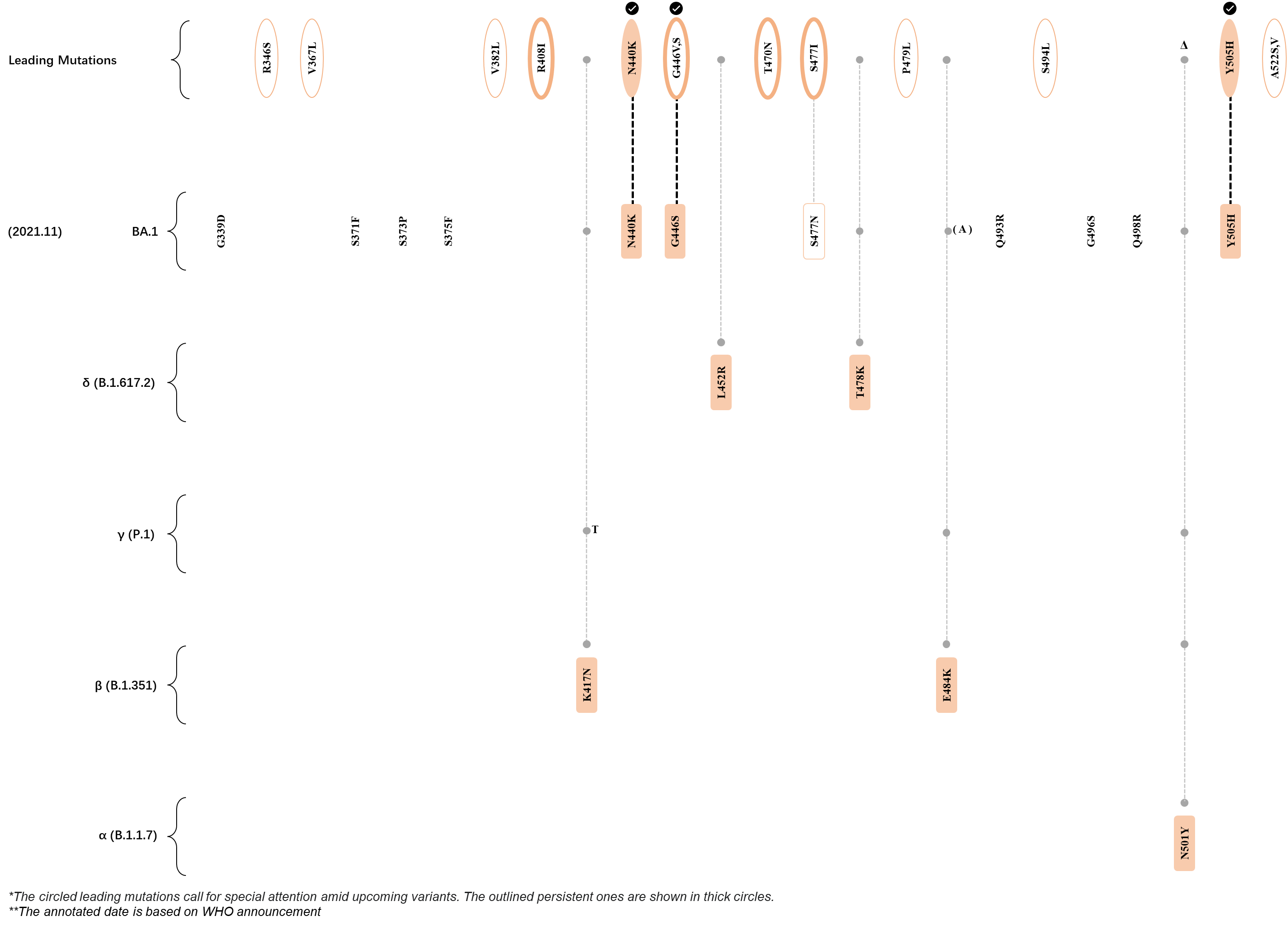
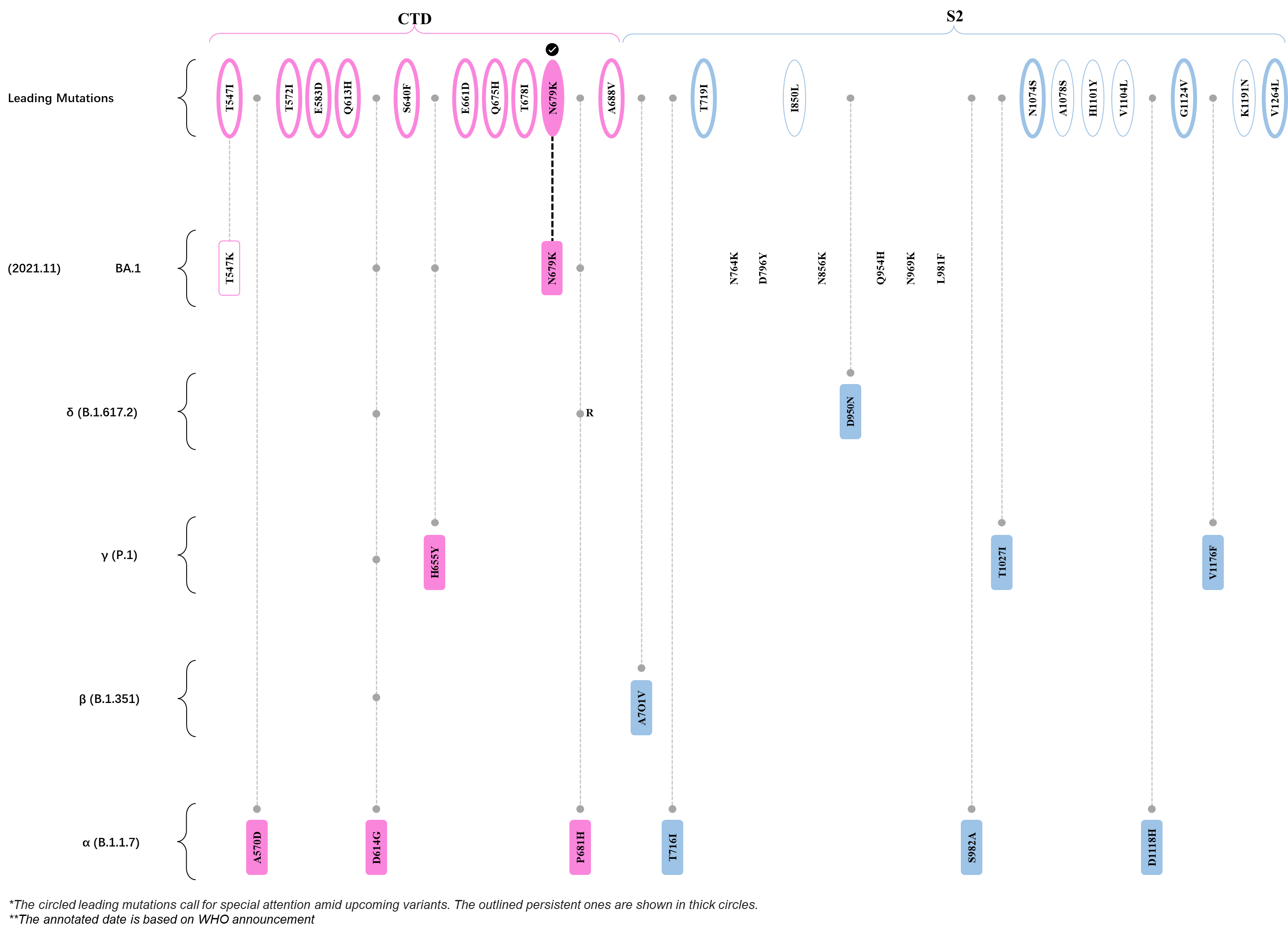
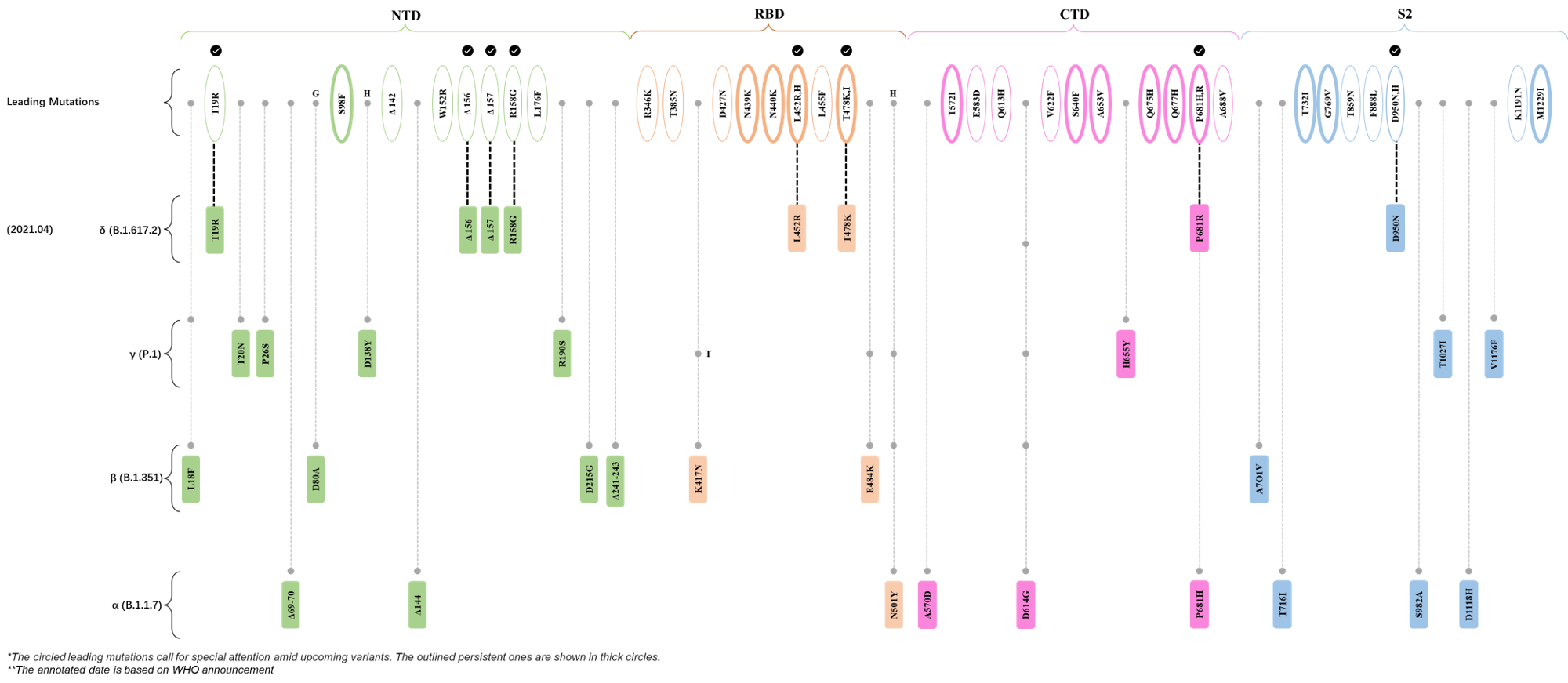
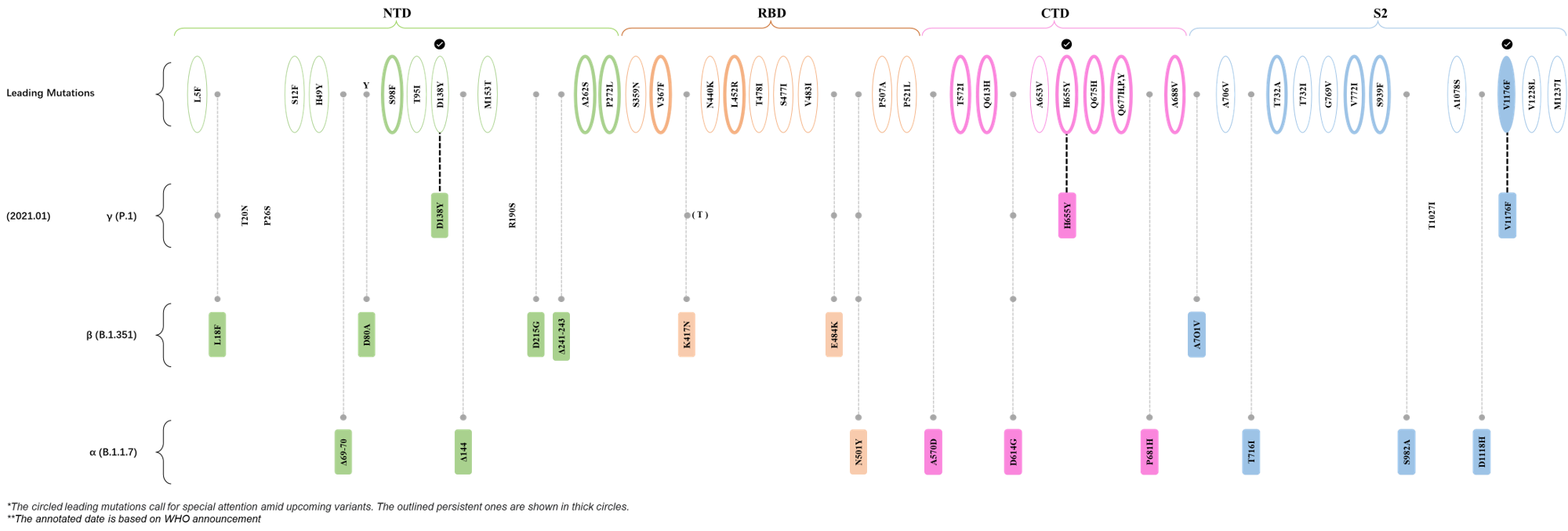
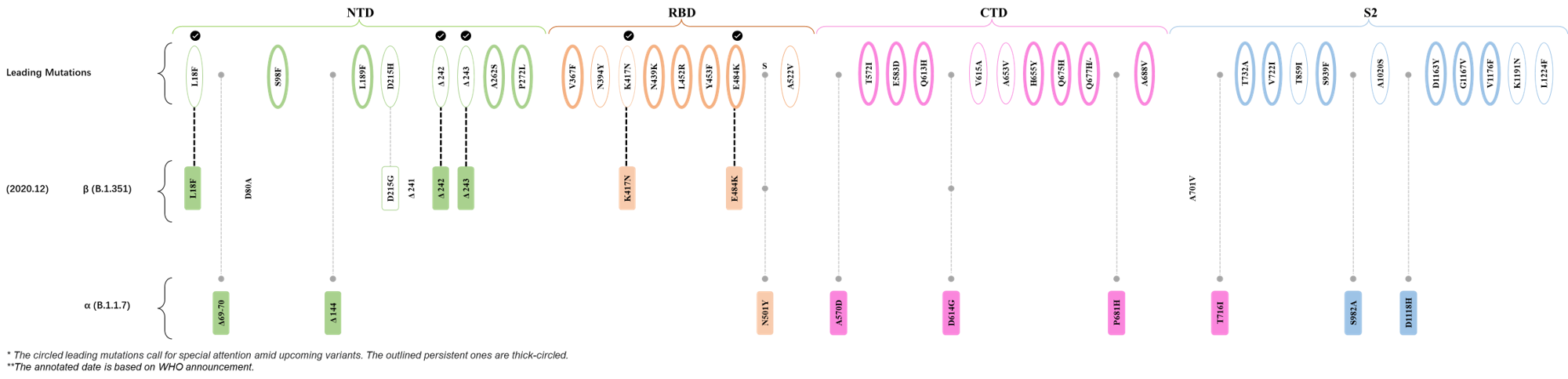
<big>Within the first 2 years of this pandemic, the World Health Organization (WHO) has already announced 4 variants of concern (VOC), which are the previously circulating α (B.1.1.7), β (B.1.351), γ (P.1), and δ (B.1.617.2) strains, and many other variants of interest (VOI).<ref name="WHO" /> The successive emergence of new SARS-CoV-2 variants has brought along many novel mutations. Between July and October 2022, 3 new members of the omicron (B.1.1.529) lineage have emerged, and subsequently been recognized as variants of interest (VOI) by the World Health Organization (WHO), which are the BA.2.75, XBB, and BQ.1 subvariants.<ref name="Covariants" /> Each of these VOIs has brought along an array of novel mutations in the constantly evolution of SARS-CoV-2. The time course analysis of identified leading mutations are presented here.<br /></big> | <big>Within the first 2 years of this pandemic, the World Health Organization (WHO) has already announced 4 variants of concern (VOC), which are the previously circulating α (B.1.1.7), β (B.1.351), γ (P.1), and δ (B.1.617.2) strains, and many other variants of interest (VOI).<ref name="WHO" /> The successive emergence of new SARS-CoV-2 variants has brought along many novel mutations. Between July and October 2022, 3 new members of the omicron (B.1.1.529) lineage have emerged, and subsequently been recognized as variants of interest (VOI) by the World Health Organization (WHO), which are the BA.2.75, XBB, and BQ.1 subvariants.<ref name="Covariants" /> Each of these VOIs has brought along an array of novel mutations in the constantly evolution of SARS-CoV-2. The time course analysis of identified leading mutations are presented here.<br /></big> | ||
| − | |||
| − | |||
| − | |||
| − | |||
| − | |||
<tabs> | <tabs> | ||
| Line 14: | Line 9: | ||
{{#tag:tab|<htmltag tagname="img" src="https://wiki.laviebay.hkust.edu.hk/deLemus/RESEARCH_TEAMS/images/PublishedPlot/2023-02b.png" alt="test for htmltag img" class="wikimg" style="display: block;width:100%;margin-left: auto;margin-right: auto;"></htmltag>|collapsed=true|name="RBD"}} | {{#tag:tab|<htmltag tagname="img" src="https://wiki.laviebay.hkust.edu.hk/deLemus/RESEARCH_TEAMS/images/PublishedPlot/2023-02b.png" alt="test for htmltag img" class="wikimg" style="display: block;width:100%;margin-left: auto;margin-right: auto;"></htmltag>|collapsed=true|name="RBD"}} | ||
{{#tag:tab|<htmltag tagname="img" src="https://wiki.laviebay.hkust.edu.hk/deLemus/RESEARCH_TEAMS/images/PublishedPlot/2023-02c.png" alt="test for htmltag img" class="wikimg" style="display: block;width:100%;margin-left: auto;margin-right: auto;"></htmltag>|collapsed=true|name="Other Domains"}} | {{#tag:tab|<htmltag tagname="img" src="https://wiki.laviebay.hkust.edu.hk/deLemus/RESEARCH_TEAMS/images/PublishedPlot/2023-02c.png" alt="test for htmltag img" class="wikimg" style="display: block;width:100%;margin-left: auto;margin-right: auto;"></htmltag>|collapsed=true|name="Other Domains"}} | ||
| + | <span id="BackToTop"></span> | ||
| + | <div class="noprint" style="background-color:#FAFAFA; position:fixed; bottom:2%; left:0.25%; padding:0; margin:0;"> | ||
| + | [[#BackToTop|Back to the Top]] | ||
| + | </div> | ||
</tab> | </tab> | ||
Revision as of 14:56, 21 March 2023
Within the first 2 years of this pandemic, the World Health Organization (WHO) has already announced 4 variants of concern (VOC), which are the previously circulating α (B.1.1.7), β (B.1.351), γ (P.1), and δ (B.1.617.2) strains, and many other variants of interest (VOI).[1] The successive emergence of new SARS-CoV-2 variants has brought along many novel mutations. Between July and October 2022, 3 new members of the omicron (B.1.1.529) lineage have emerged, and subsequently been recognized as variants of interest (VOI) by the World Health Organization (WHO), which are the BA.2.75, XBB, and BQ.1 subvariants.[2] Each of these VOIs has brought along an array of novel mutations in the constantly evolution of SARS-CoV-2. The time course analysis of identified leading mutations are presented here.